Big Update for Schools in J&K: New Rules on School Bag Weight Announced
Srinagar, 23 November: The Directorate of School Education Kashmir (DSEK) has issued a strong and final warning to all government and private schools across the Valley, directing them to immediately comply with the rules that regulate school bag weight and classroom workload.
The fresh circular makes it clear that non-compliance will invite serious action, including cancellation of affiliation and recognition under Rule 8A of the J&K School Education Act.


Officials told ProKashmiri.in that despite repeated directions in recent years, most schools have failed to implement the guidelines on the ground. Inspections, parent complaints, and field reports have shown widespread violations, pushing the Directorate to issue what it calls its “severe” and “last” reminder.
Rule 8A was inserted into the J&K School Education Act following High Court directions in a Public Interest Litigation. The rule lays down strict instructions about homework, subject load, number of books, and maximum bag weight for each class.
The DSEK circular states that earlier orders have “not been observed at ground level,” forcing the department to reiterate and enforce the norms in full.
Schools have now been ordered to comply with S.O. 126 dated 15 April 2020, which operationalises Rule 8A. Alongside this, strict enforcement of the School Bag Policy 2020 of the Government of India has been made mandatory.
One of the strongest directives relates to young children. As per Rule 8A:
- No formal books are permitted for Nursery, LKG, and UKG.
- Children in these classes cannot carry any school bag, except a light carrier for their lunch box.
- No homework is allowed for Classes 1 and 2.
DSEK has warned schools that these rules are non-negotiable and will be checked during inspections.
The circular again highlights the maximum permissible weight limits, which include the bag itself along with books and other material:
- Class I–II: Up to 1.5 kg
- Class III–IV: Up to 3 kg
- Class VI–VII: Up to 4 kg
- Class VIII–IX: Up to 5 kg
- Class X: Up to 5.5 kg
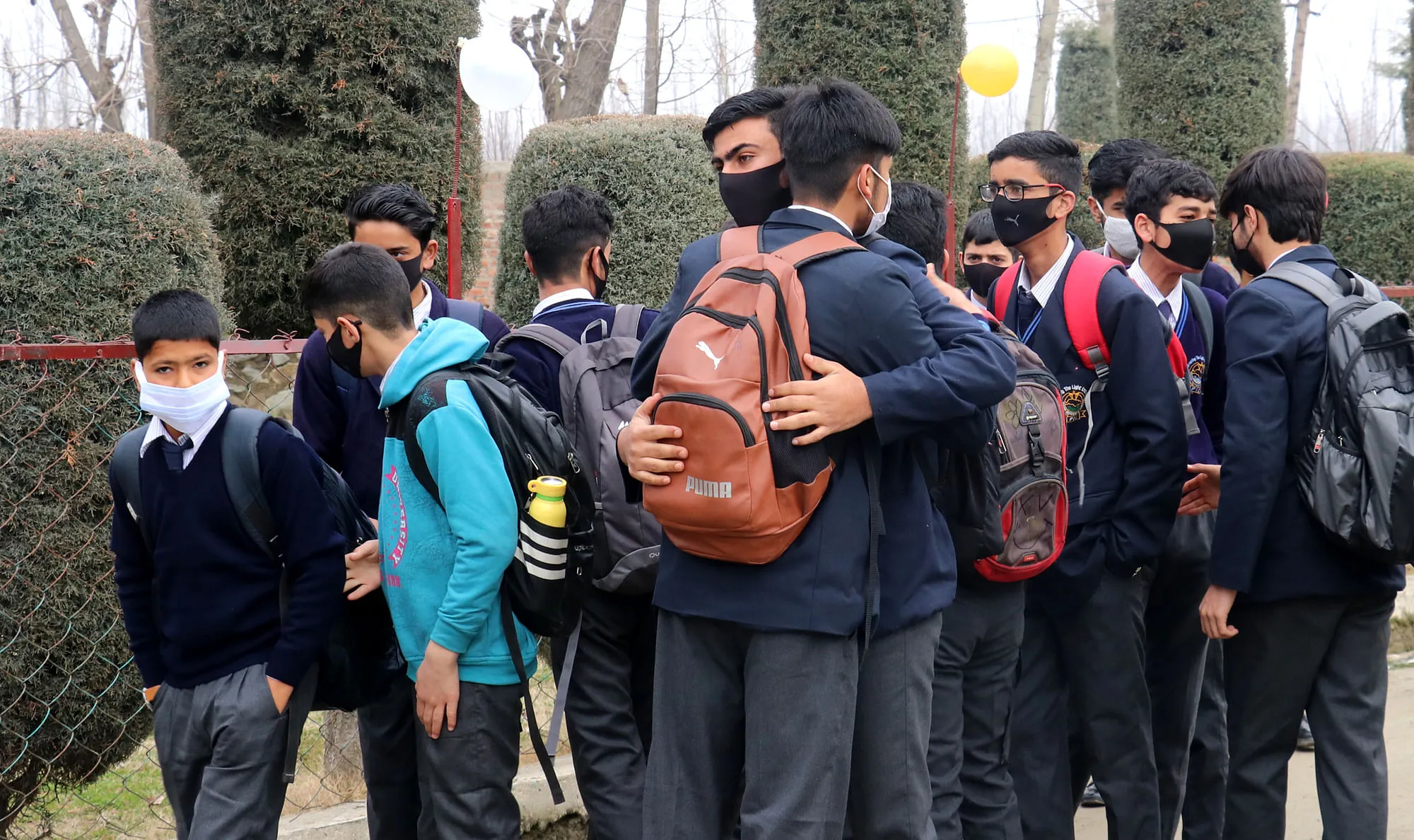
Officials said heavy bags contribute to back pain, neck strain, shoulder problems, and long-term posture issues in children. The School Bag Policy 2020 also points out that overloaded bags can lead to lasting physical stress.
The DSEK has reminded schools that they cannot prescribe more subjects than allowed:
- Class 1–2: Only Language and Arithmetic
- Class 3–5: Language, EVS, Arithmetic
- Class 6–7: Language, Mathematics, Science, Social Science
The Directorate said many schools continue to add extra subjects and extra notebooks, which is a direct violation of the rules.
To reduce the daily burden, the School Bag Policy recommends:
- A single notebook for Classes I and II, kept mostly in school.
- Only one notebook at a time for Classes III–V, with the second notebook stored in school.
- Use of files with loose sheets from Class VI onwards.
- Avoiding thick notebooks and bulky diaries that unnecessarily add weight.
- Enforcement Teams and Grievance Helplines
The circular has been sent to Deputy Commissioners, Joint Directors, Chief Education Officers, cluster heads, and ZEOs with instructions to enforce the rules strictly. Schools will also be monitored through surprise checks.
All enforcing authorities have been ordered to set up a helpline for parents to report violations related to school bag weight, unnecessary books, or additional homework.
Officials said this latest action reflects the Directorate’s renewed push to protect the physical health and mental well-being of school-going children, after years of complaints from parents.